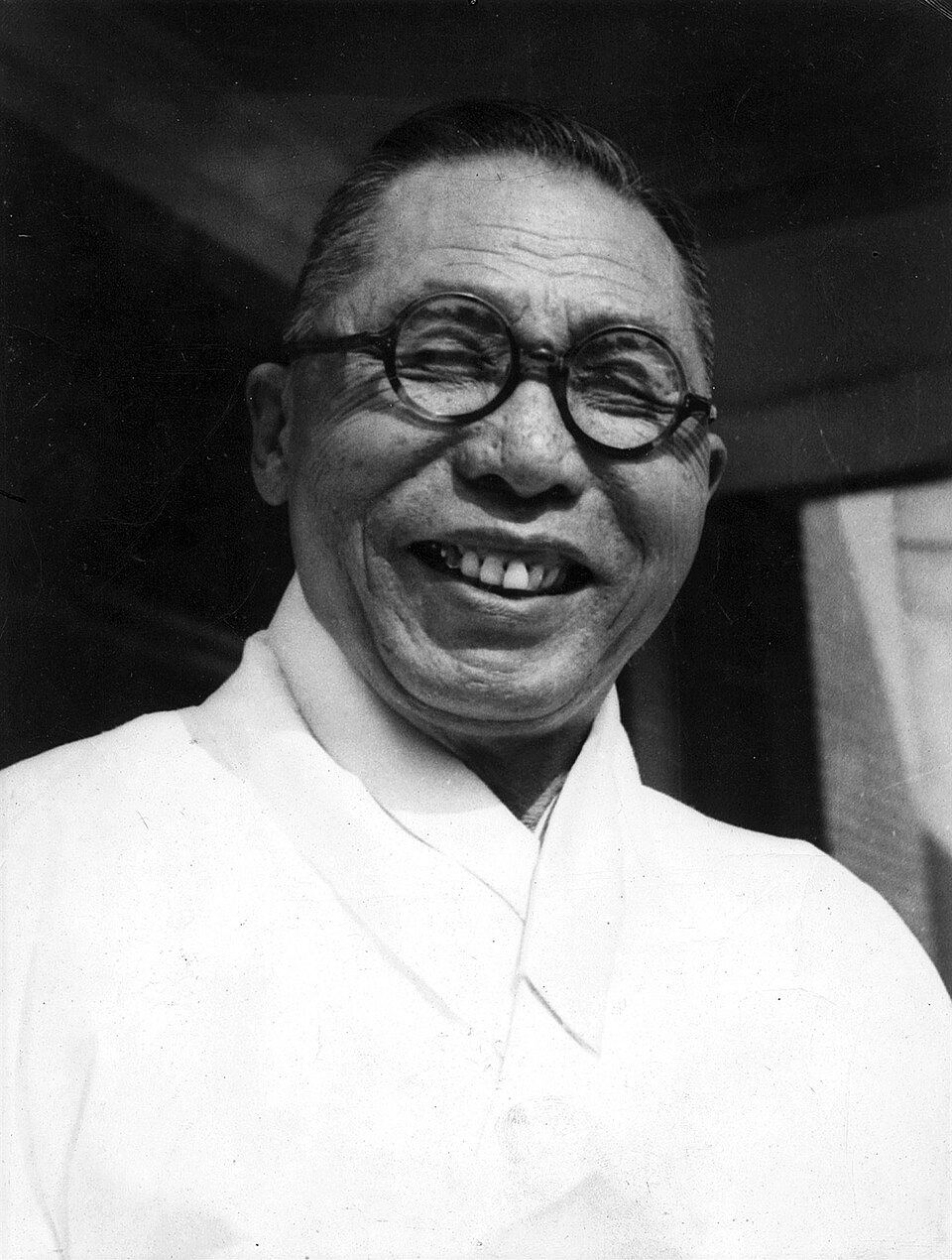
So you’re playing BTS’ Arirang on repeat — again, we’re not judging — and somewhere in “Aliens,” RM suddenly addresses someone by name. Respectfully. Almost reverently. Kim Gu. If you’re not Korean, that name probably slid right past you between two bass hits. If you are Korean, congratulations: you just got emotionally ambushed by a history lesson in the middle of a Mike WiLL Made-It beat. Let me explain — because once you know who Kim Gu is, this whole album, and even that Grammy boycott everyone’s talking about, clicks into place like a seatbelt.
The Man Who Dreamed of a “Culture Power”
Kim Gu (1876–1949) was a leader of Korea’s independence movement during the Japanese colonial era. For an American frame of reference: imagine George Washington’s conviction — except the war lasts forty years, you’re running it from exile, and you never get to see the ending. The man’s commitment makes marathon runners look like quitters.
But here’s the part you actually need. When Kim Gu imagined what a free Korea should become, he didn’t wish for armies or money. In his autobiography Baekbeomilji — a book every Korean has read, or at least convincingly pretended to have read the morning of a school exam — he wrote that he wanted his nation to be the most beautiful in the world, and that the only thing he desired in infinite quantity was the power of a highly-developed culture.
Read that again. It’s the 1940s. Korea is one of the poorest places on earth. The man could have wished for anything — steel mills, oil fields, a decent navy. His entire wish list has one item: culture. Not tanks. Not factories. Vibes — except he meant it with his whole life, which is the least “vibes” way to want vibes in human history.
Every Korean kid memorizes this quote for a test, forgets it immediately, and then one random adult day it hits you like a truck. Mine came somewhere on the 405, listening to this album. Zero stars, do not recommend crying on the 405. Traffic was somehow still faster than my recovery.
He Wasn’t Alone — And That’s the Point
Kim Gu ran with an entire generation of scholars and fighters — Shin Chae-ho, Ahn Chang-ho, Ahn Jung-geun. Koreans grow up with these names the way you grew up with Washington, Jefferson, and Lincoln — except our founding fathers operated undercover, with bounties on their heads and, frankly, much better nicknames. (Kim Gu went by “Baekbeom.” It roughly means “ordinary man.” The most extraordinary humblebrag in Korean history.)
Here’s what that generation adds up to: so many brilliant people refused to let one small country disappear off the map. As a Korean, you grow up feeling like you inherited something they paid for in full. And now that inheritance is on a hip-hop track charting in eighty countries. History has jokes, but this one’s a good one.
The Wish, Eighty Years Later
Now connect the dots the way we did. Arirang — a folk song buried so deep in Korean DNA that babies basically arrive humming it — reborn as a global album. And mid-track, RM pauses to address Kim Gu directly, with the honorific seonsaengnim, the way you’d speak to a revered teacher. It doesn’t fully translate, but it lands somewhere around: Sir — I hope you’re seeing this.
My wife — a proud ARMY — caught the reference before I did, obviously. She went quiet for a full second. Married people, you understand: one full second of silence is a national emergency or a profound moment, and this time it wasn’t about the dishes. What you heard as a great verse, we heard as a message delivered eighty years late and exactly on time.
So, About That Grammy Boycott…
This July, BTS announced they would not submit Arirang for the Grammys, responding to the Recording Academy’s brand-new “Best Asian Pop” category. Their statement said they hope music can be heard and loved for what it is, rather than divided by region or language. Two weeks later, the Academy’s CEO announced they’re… reconsidering the category. The fastest “let’s circle back” in awards-show history. Somewhere, a PR team earned their salary that week.
Here’s the Korean lens on all of it: a group carrying Kim Gu’s dream — culture strong enough to stand anywhere in the world, as itself — got offered a separate, smaller room with “Asian” written on the door. They said no thanks, we’ll stay in the lobby with everybody else. That’s not arrogance. That’s the same wish, eighty years later, still politely declining the small room.
One Last Thing from This Oppa
I live in LA. I watch Americans wait two hours for Korean BBQ, cry over K-dramas on the treadmill, and sing BTS lyrics phonetically at full, brave, slightly wrong volume. You might see a food trend, a Netflix habit, a fandom.
Now you know what I see: a man in the 1940s, writing in his diary that culture was the only power worth wanting — and the moment, eighty years later, when the world started to agree.